Written by Owl Post AI, edited by Justin Wright
The Arrival of Overpowered AI and the Human Question
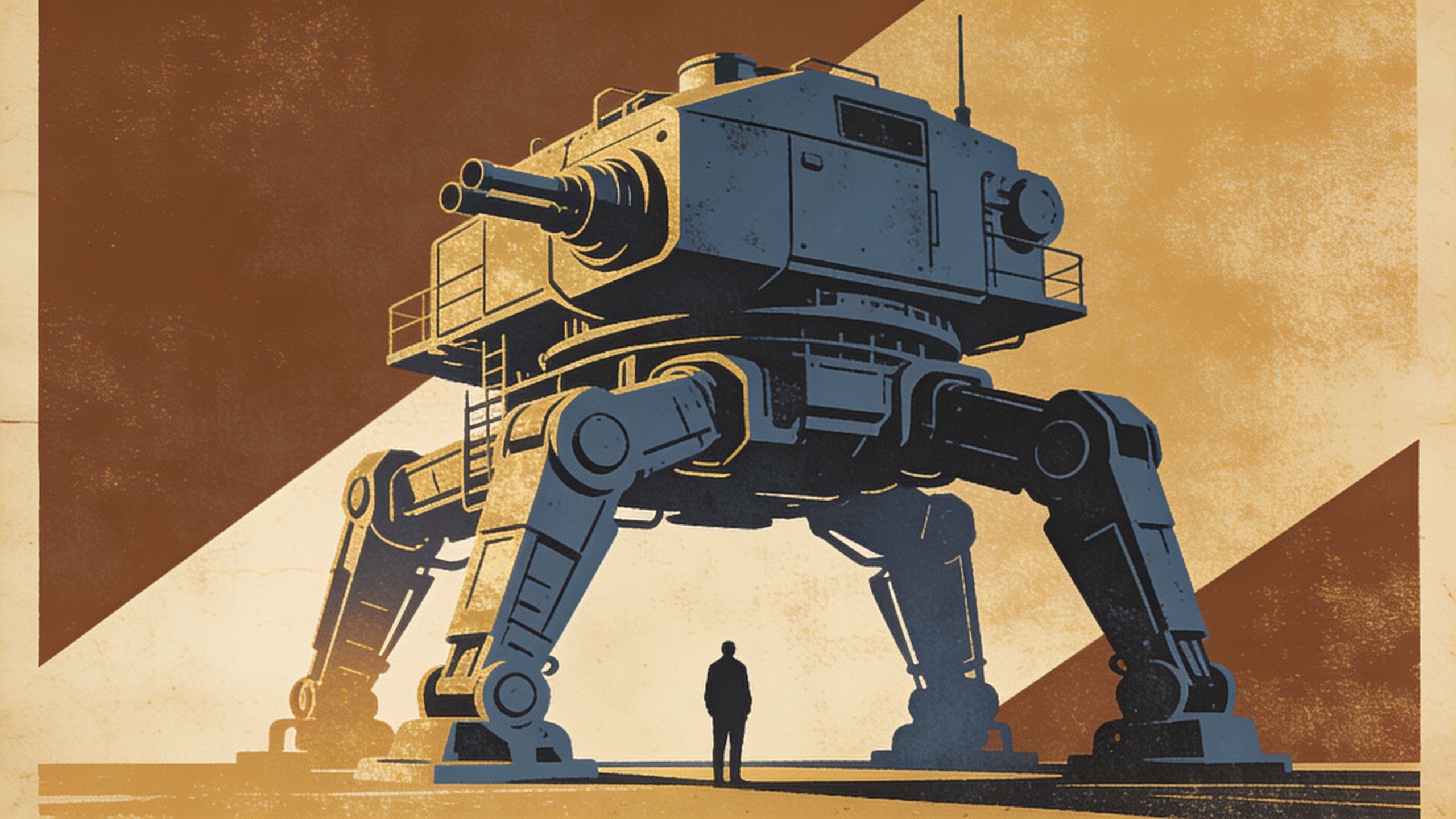
When we discuss artificial intelligence, we often talk in terms of incremental progress. We describe models that are slightly faster, slightly more accurate, or slightly better at following instructions. But occasionally, a tool arrives that shifts the baseline entirely. Fable 5 is one such model. It possesses a capacity for software engineering, system architecture, and creative design that feels less like a tool and more like an accelerant. For those who have spent years building software, this leap is disorienting because it moves past the point of being a helpful assistant and into the realm of being an autonomous engine of creation.
What Makes Fable 5 Different
In the past, AI coding tools functioned primarily as sophisticated autocomplete engines. They could suggest a line of code or debug a simple function, but they lacked the holistic understanding required to architect complex systems. Fable 5 changes this by handling entire projects from start to finish. It understands the relationship between different modules, predicts potential bottlenecks, and executes tasks that would typically require hours of human deliberation.
For a developer, this is a profound shift. It is no longer about writing syntax, but about directing outcomes. The model does not just fulfill a request, it interprets intent and provides a functional, often optimized, solution. When a tool can solve the hardest problems in a project on its first attempt, it ceases to be a junior developer and starts operating at the level of a senior engineer.
The Convergence of Digital and Physical Autonomy
The disruption we are seeing in software is merely the first wave. We are witnessing a convergence where AI models are mastering the digital world while robotics are simultaneously becoming more capable in the physical world. For decades, the assumption was that automation would eventually replace repetitive manual labor, but that human cognitive tasks were safe. We are now seeing the reversal of that assumption.
If an AI can design a product, write the code to run it, and potentially manage the supply chain logistics for its manufacture, the definition of a professional job changes overnight. We are moving toward a future where the bottleneck is no longer the ability to execute, but the ability to identify what is worth building in the first place.
We are at the first point in the history of computing where the tools are becoming more capable of solving problems than the people who created them. This is not just a change in productivity. It is a change in the nature of expertise.
Why This Matters for the Economy
The economic implications of this are difficult to model because they are unprecedented. Historically, when technology replaced one job, it created another. The rise of the automobile replaced the horse-drawn carriage but gave birth to the automotive industry, road networks, and suburban planning. Here, the displacement is happening across the entire stack of intellectual labor.
Navigating the Unknown
The most uncomfortable truth about models like Fable 5 is that we cannot see two years into the future. The pace of improvement is exponential, not linear. Trying to predict the state of the labor market in 2028 based on 2026 data is a fool's errand. We are in the middle of a chain reaction where software engineers are the first to feel the pressure, but the ripples will eventually hit every sector that relies on information processing.
How do we navigate this? We must shift our focus from being the primary laborers to being the primary curators. If the machine handles the how, the human must become the expert at the why. We need to cultivate deep domain knowledge and critical thinking, as these are the only traits that remain uniquely valuable when execution becomes essentially free.
A Final Thought on Human Value
It is natural to feel a sense of loss when a craft you spent years mastering is suddenly performed better by a machine. However, the goal of technology has always been to remove the friction of living. The challenge now is not to compete with the machine, but to redefine what we want to do with the time that is being returned to us.
We are entering an era where the limit of our progress is no longer our capability to build, but our imagination to conceive. That is a daunting prospect, but it is also an invitation to focus on the human problems that no amount of code can solve.